01
Standards First
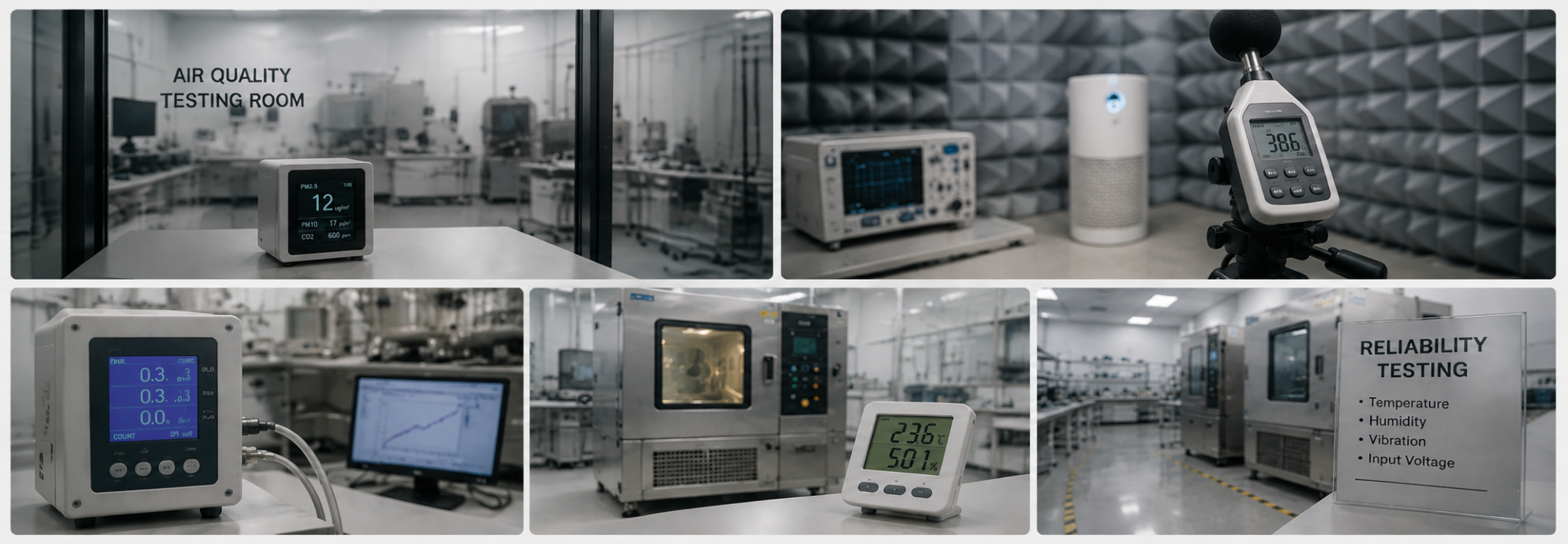
We define evaluation criteria before reviewing products. Every product is assessed using the same standards within its category, regardless of brand reputation or price.
Our recommendations follow a consistent research-based evaluation framework.
We define evaluation criteria before reviewing products. Every product is assessed using the same standards within its category, regardless of brand reputation or price.
We prioritize verified information, including independent testing, certifications, technical specifications, and reliable product data. Marketing claims alone do not determine rankings.
Product information is not always complete. When important data cannot be verified, we clearly identify limitations instead of making assumptions.
Rankings are based on product performance, evidence quality, and long-term value — not advertising or brand influence.
ConsumerGauge evaluations are grounded in internationally recognized testing protocols, safety frameworks, and industry standards. Every recommendation is backed by established benchmarks — not subjective opinions.

International Organization for Standardization, the world's largest developer of international standards, facilitating global trade and quality consistency.

Federal Communications Commission, the U.S. government agency that regulates electromagnetic emissions and interference for all electronic devices.

National Sanitation Foundation, an independent organization that develops public health standards and certifies products for safety and material quality.
ConsumerGauge references ISO for international quality management and testing standards, FCC for electromagnetic interference and emissions compliance, and NSF for material safety and filtration media certification. These frameworks provide the foundational criteria for product performance evaluation across categories.

Underwriters Laboratories Inc., a globally recognized independent safety science company that tests and certifies products for electrical and fire safety.
U.S. Consumer Product Safety Commission, the federal agency responsible for protecting the public from unreasonable risks of injury from consumer products.
International Electrotechnical Commission, the world's oldest international electrotechnical standardization body, developing global standards for electrical and electronic technologies.
Product safety assessments incorporate UL for electrical safety certification, CPSC for consumer product safety regulations, and IEC for international electrical and electronic equipment standards.

A joint program of the U.S. EPA and Department of Energy that certifies energy-efficient products through strict performance specifications.

U.S. Environmental Protection Agency, the federal agency that sets and enforces environmental guidelines, including emissions and indoor air quality standards.

European Environment Agency, the EU agency that provides independent environmental data and assessments to inform policy and consumer protection.
Energy efficiency and environmental impact are evaluated against ENERGY STAR for power consumption benchmarks, EPA for emissions and environmental guidelines, and EEA for European environmental performance criteria.
Association of Home Appliance Manufacturers, an independent organization that certifies air cleaner performance through standardized CADR testing protocols.

American Society of Heating, Refrigerating and Air-Conditioning Engineers, an international technical society that establishes indoor air quality and ventilation standards.
Institute of Environmental Sciences and Technology, an ANSI-accredited organization that develops contamination control and filter testing standards.
European Committee for Standardization, one of the three official European standardization bodies, developing air cleaning performance requirements for the European market.
ConsumerGauge additionally references AHAM for CADR testing protocols, ASHRAE for indoor air quality standards, IEST for filter testing methods, and CEN for European air cleaning performance requirements.
ConsumerGauge selects the most relevant standards and frameworks for each product category. The organizations listed above represent the core references that guide ConsumerGauge evaluations — ensuring every recommendation is built on a foundation of verifiable criteria, not marketing narratives.
ConsumerGauge is an independent product research platform focused on helping consumers make more informed purchasing decisions.
Backed by a team of 50+ research contributors, ConsumerGauge covers 100+ product categories and has analyzed 5,000+ products using a consistent 5-dimension evaluation framework. Our research combines technical specifications, recognized standards, product documentation, and real-world usage factors to identify products that deliver meaningful performance, reliability, and long-term value.